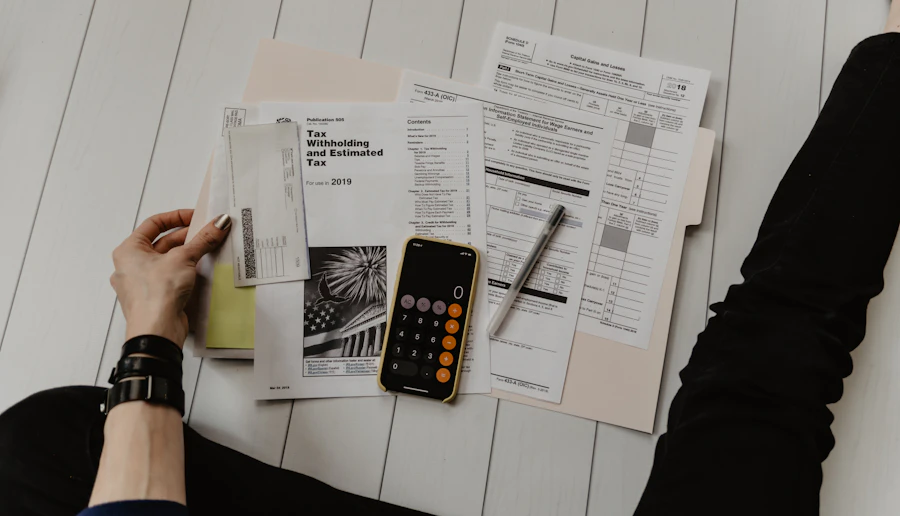
1031 Exchange Tax Planning for Real Estate Investors
Maximize your real estate investments with expert 1031 exchange tax planning strategies from Centennial Accounting Group. Get your free consultation today!
Centennial Accounting GroupMay 13, 2026
Maximize Your Real Estate Profits: The Power of 1031 Exchange Tax Planning
TL;DR
A 1031 Exchange allows real estate investors to defer capital gains taxes when reinvesting sale proceeds into a "like-kind" property.
Strict timelines (45 days for identification, 180 days for acquisition) and rules must be followed to qualify, making professional guidance essential.
Strategic 1031 exchange tax planning can significantly improve cash flow and accelerate wealth building for property investors in Colorado and nationwide.
As a real estate investor, you're constantly looking for ways to optimize your portfolio and amplify your returns. But what happens when you sell a profitable property? The immediate thought often turns to the significant bite capital gains taxes can take out of your hard-earned profits. Imagine this: you've nurtured a commercial property in Boulder for ten years, seeing its value quintuple. You decide to sell for a handsome profit, only to realize that a substantial chunk of that profit will go straight to the IRS. This isn't just a hypothetical scenario; it's a common pain point that can drastically reduce your net proceeds and slow your investment growth.
However, there's a powerful tool available to savvy investors that can defer those capital gains taxes indefinitely, allowing you to keep more of your money working for you: the 1031 Exchange. Proper 1031 exchange tax planning isn't just about avoiding taxes today; it's about strategic wealth accumulation, allowing you to continually reinvest your capital without erosion. At Centennial Accounting Group, our team specializes in guiding Colorado and national real estate and property investors through the complexities of these exchanges, turning potential tax burdens into opportunities for growth. Let's delve into how you can leverage this invaluable provision.
Understanding the Basics of a 1031 Exchange
At its core, a 1031 Exchange, named after Section 1031 of the U.S. Internal Revenue Code, allows you to defer capital gains taxes when you sell an investment property and reinvest the proceeds into another "like-kind" investment property. Crucially, this isn't tax avoidance; it's tax deferral. You essentially carry over the tax basis from the old property to the new one.
1. What Qualifies as "Like-Kind"?
The term "like-kind" is surprisingly broad in the context of a 1031 Exchange for real estate. It generally refers to the nature or character of the property, not its grade or quality. For example, unimproved land can be exchanged for an apartment building, a retail center for industrial property, or a single-family rental for a multi-family unit. What doesn't qualify? Personal property (like vehicles or equipment, unless specifically part of a real estate transaction), your primary residence, "fix-and-flip" inventory, or foreign property.
Real-World Scenario: An investor owns a duplex in Denver, generating healthy rental income. After several years, they decide to sell it and acquire a small commercial office building in Aurora. Both properties are held for investment/income-producing purposes, making this a classic "like-kind" exchange, allowing the investor to defer significant capital gains.
2. The Role of a Qualified Intermediary (QI)
You cannot directly receive the cash proceeds from the sale of your relinquished property if you want to defer taxes. This is where a Qualified Intermediary (QI) or "Exchanger" comes in. The QI holds the proceeds from the sale of your relinquished property and uses them to acquire the replacement property on your behalf. This prevents "constructive receipt" of funds, which would trigger immediate taxation.
For example, if you sell a property for
,000,000 with a $400,000 capital gain, and you try to handle the funds yourself, you'd be looking at a federal capital gains tax bill of potentially $60,000 to
20,000 (15-20%) plus the 3.8% Net Investment Income Tax, not to mention state taxes. With a QI, these funds remain untaxed until a future taxable event.
Navigating the Strict Timelines and Rules
The success of your 1031 Exchange hinges on meticulously following specific timelines and rules set by the IRS. Missing these deadlines, even by a single day, can disqualify your exchange and trigger tax liabilities.
3. The 45-Day Identification Period
Once you sell your relinquished property (and the QI receives the funds), you have exactly 45 calendar days to identify your potential replacement properties. This identification must be made in writing, signed by you, and sent to your QI or other specified parties. There are generally three rules for identification:
Three-Property Rule: You can identify up to three properties of any value.
200% Rule: You can identify more than three properties, provided their aggregate fair market value does not exceed 200% of the fair market value of the relinquished property.
95% Rule: You can identify an unlimited number of properties, but you must acquire at least 95% of the aggregate fair market value of all identified properties. This rule is rarely used due to its strictness.
Real-World Scenario: A Centennial investor sells a retail strip center in Westminster for $2.5 million. On day 40 of their identification period, they submit a written list to their QI, identifying three potential replacement properties: a fourplex in Fort Collins valued at
.2 million, a small industrial warehouse in Greeley at $700,000, and a mixed-use building in Loveland at $900,000. This falls perfectly within the Three-Property Rule.
4. The 180-Day Exchange Period
After the 45-day identification period ends, you have an additional 135 calendar days (totaling 180 days from the sale of the relinquished property) to close on one or more of your identified replacement properties. Again, this deadline is non-negotiable and cannot be extended, even if the 45-day period ends on a weekend or holiday.
It's crucial to plan for potential delays in loan approvals, inspection issues, or closing complications. Our team often advises clients to identify more than one suitable replacement property to increase their chances of meeting this acquisition deadline. This proactive fractional CFO services approach can significantly de-risk the exchange process.
5. Reinvestment Requirements: No "Boot"
To achieve a fully tax-deferred exchange, you generally need to acquire a replacement property (or properties) that is equal to or greater in value than the net sales price of your relinquished property, and you must reinvest all of the proceeds from the sale. If you receive cash or property that is not "like-kind" (known as "boot"), that portion will be taxable.
For instance, if you sell a property for
,000,000 and only reinvest $900,000 into a replacement property, the
00,000 difference is considered "boot" and will be subject to capital gains tax. Similarly, if you reduce your debt on the replacement property compared to the relinquished property, the amount of debt reduction is also considered "boot" unless offset by an infusion of cash into the replacement property.
Careful tax preparation services and planning here are paramount to avoid unintended tax consequences.
Strategic Considerations for Real Estate Investors
Beyond the fundamental rules, optimizing your 1031 Exchange involves layering in strategic tax planning that considers your broader investment goals and potential Colorado-specific nuances.
6. Depreciation Recapture and Its Deferral
One of the often-overlooked benefits of a 1031 Exchange is the deferral of depreciation recapture. When you sell an investment property, any depreciation you've taken over the years reduces your cost basis. Upon sale, this depreciation is "recaptured" and taxed at a maximum rate of 25%, regardless of your ordinary income tax bracket. A successful 1031 Exchange defers this recapture tax, keeping more capital available for reinvestment.
For a Colorado property investor who has depreciated a $500,000 property down to a $300,000 basis over several years, selling it would typically trigger a $50,000 depreciation recapture tax (25% of $200,000). A 1031 Exchange avoids this immediate tax, allowing that $50,000 to be reinvested and continue generating returns.
7. Long-Term Wealth Building and "Swap 'Til You Drop"
The beauty of the 1031 Exchange is its deferral nature. Investors can theoretically continue to exchange properties throughout their lifetime, deferring capital gains and depreciation recapture taxes with each transaction. This strategy is often called "swap 'til you drop." Upon the investor's death, the properties held in the exchange receive a "step-up in basis" to their fair market value on the date of death. This means the heirs receive the property with a new, higher basis, effectively eliminating the deferred capital gains tax liability for those accumulated gains.
This generational wealth transfer aspect makes 1031 exchange tax planning a cornerstone of many real estate investor's long-term strategies. It can significantly compound wealth over decades, far beyond what would be possible with repeated taxable sales.
8. Navigating Colorado-Specifics and Federal Changes
While the 1031 Exchange is a federal regulation, understanding local market dynamics and potential future state legislation is always prudent. For instance, while Colorado doesn't have a state capital gains tax separate from its income tax, changes to federal tax laws can directly impact 1031 exchanges. Our team stays abreast of these legislative developments to ensure your Real Estate & Property Investors strategies remain compliant and optimized. For instance, debates around the Infrastructure Investment and Jobs Act included proposed changes to 1031 exchanges, though they ultimately remained largely intact. Vigilance is key.
Why This Matters for Real Estate & Property Investors Operators
For Real Estate & Property Investors operators, especially those managing a portfolio of rental properties, commercial spaces, or development projects, the 1031 Exchange isn't just a niche tax rule; it's a fundamental tool for portfolio management and wealth acceleration. Without this deferral mechanism, every disposition of an appreciated asset would trigger a significant tax event, severely limiting your ability to reallocate capital, upgrade properties, or expand into new markets.
Consider a developer in Fort Collins who frequently sells completed projects to fund new ones. If each sale was taxable, their available capital for new ventures would be drastically reduced, potentially slowing their development pipeline by 15-20% per project. By utilizing 1031 exchanges, they can seamlessly transition from one project to the next, maintaining momentum and scale. This allows for continuous capital deployment, enhancing returns, and building a more substantial asset base over time. It's about optimizing cash flow and ensuring your capital works harder for you, not for the tax man.
Your Action Checklist
Consult Early: Before listing your relinquished property, speak with a tax professional specializing in 1031 exchanges. Our team can help you chart the best course of action.
Engage a Qualified Intermediary (QI): Select a reputable QI before your closing. They are critical to the legal execution of the exchange.
Understand "Like-Kind": Confirm that both your relinquished and prospective replacement properties qualify as "like-kind" for investment purposes.
Adhere Strictly to Timelines: Mark your calendar for the 45-day identification and 180-day acquisition deadlines. No extensions are generally granted.
Identify Multiple Properties: To mitigate risk, especially in competitive markets like Denver or Colorado Springs, identify more than one suitable replacement property.
Plan for "Boot": Work with your accountant to understand any potential "boot" and its tax implications if you cannot achieve a full deferral.
Maintain Thorough Records: Keep meticulous records of all transaction documents, identification lists, and correspondence with your QI. This is crucial for potential audit defense.
Review Your Overall Investment Strategy: Periodically assess how 1031 exchanges fit into your long-term wealth goals, considering estate planning and future asset dispositions.
Frequently Asked Questions
Can I exchange a property I rent out part-time and use as a vacation home part-time?
This is a tricky area. The IRS provides specific guidelines for properties with mixed personal and investment use, often requiring a determination based on the number of days rented versus personal use. Generally, the more the property is used for personal enjoyment, the less likely it is to qualify. It's crucial to consult with a tax expert to determine eligibility and potential allocated partial exchange treatment.
What if I can't find a replacement property within 180 days?
If you fail to close on an identified replacement property within the 180-day window, the exchange fails. The funds held by the Qualified Intermediary will then be returned to you, and the sale of your relinquished property will be treated as a taxable event, triggering capital gains tax as if no exchange was initiated.
Can I do a reverse 1031 Exchange?
Yes, a reverse 1031 Exchange is possible, where you acquire the replacement property before selling the relinquished property. These are significantly more complex and typically involve an Exchange Accommodation Titleholder (EAT) who "parks" the replacement property for up to 180 days. Due to the complexity and higher costs, these are best undertaken with expert guidance. Centennial Accounting Group can assist in navigating these advanced strategies.
How does a 1031 Exchange affect my depreciation schedule for the new property?
When you complete a 1031 Exchange, the depreciable basis of your new property generally includes any remaining basis from the relinquished property plus any additional cash or debt used to acquire the new property. This often means you continue depreciating the original basis carried over, and any new money is treated with a new depreciation schedule. Proper professional bookkeeping and accounting are essential to track this accurately.
How Centennial Accounting Group Helps
Navigating the intricate landscape of 1031 Exchanges requires precise knowledge, meticulous planning, and unwavering attention to detail. At Centennial Accounting Group, our experienced team specializes in providing comprehensive 1031 exchange tax planning services for real estate and property investors across Colorado and the entire nation. From initial consultation and strategic planning to working with your Qualified Intermediary and ensuring compliance with all IRS regulations, we are your trusted partner in maximizing your investment returns and deferring your capital gains. Don't leave your wealth on the table; let us help you build a robust, tax-efficient real estate portfolio. Schedule a free consultation today to discuss your 1031 exchange needs and explore how our Real Estate & Property Investors services can benefit you.
Sources & References
This article references information from the following authoritative sources:
Disclaimer: This article is provided for informational and educational purposes only and does not constitute legal, tax, or financial advice. Tax laws and regulations change frequently, and the information presented may not reflect the most current legal developments. Every individual's tax situation is unique, and the strategies discussed may not be suitable for your specific circumstances.
Before making any tax-related decisions, we strongly recommend consulting with a qualified tax professional or accountant. CAG Accountant is not responsible for any actions taken based on the information in this article. All referenced trademarks and copyrights belong to their respective owners.